AI-Powered Fire and Smoke Detection with Video Analytics in UAE
United Arab Emirates, United Arab Emirates, Asia, Pacific and Middle East
Posted 1 view
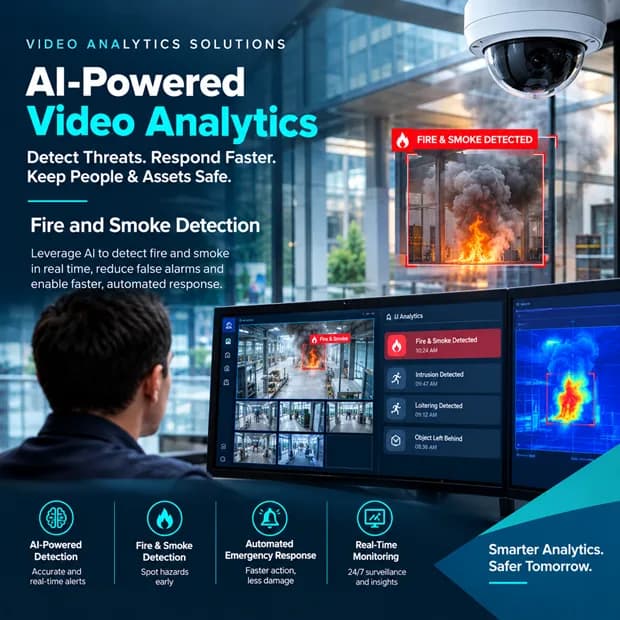
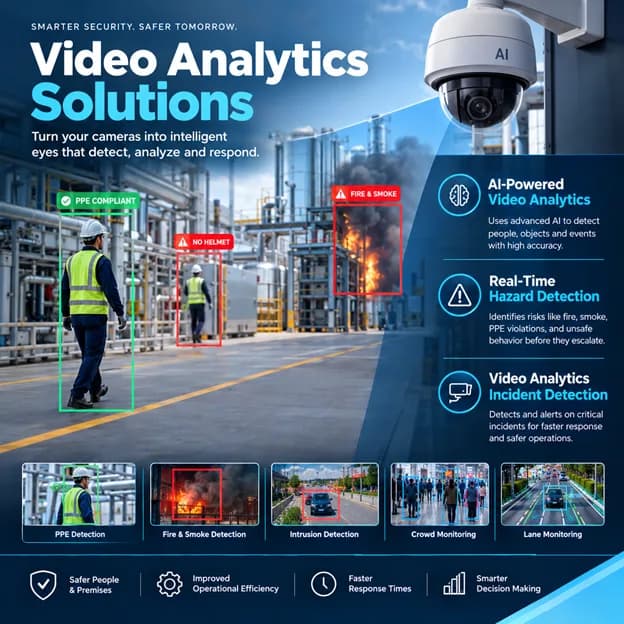
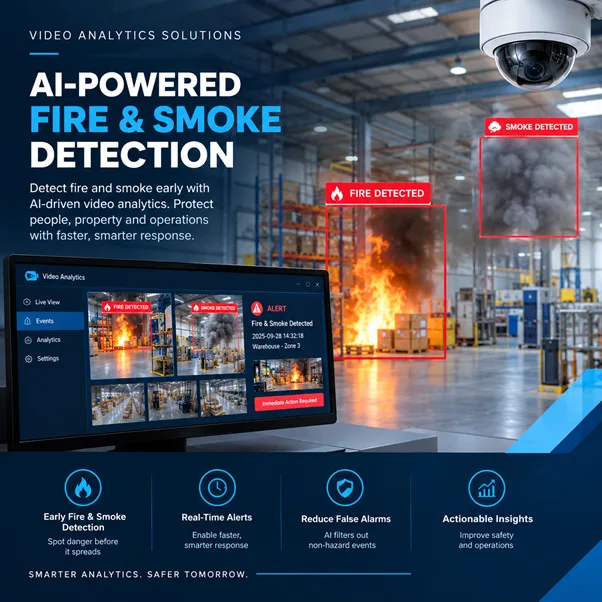
AI-powered fire and smoke detection with Video Analytics is changing how businesses across the Emirates protect people, property and operations from one of the most destructive risks they face. Instead of waiting for smoke to drift into a ceiling sensor, intelligent cameras recognise the first visible traces of flame or smoke and alert security and fire teams within seconds.
This guide explains how the technology works, where it delivers the most value in Dubai, Abu Dhabi and the Northern Emirates, how it fits within UAE regulations, and what decision-makers should evaluate before investing. It is written for facility managers, security directors, HSE leaders, consultants and property owners who want earlier warning, fewer false alarms and a clearer view of what is happening on site.
Why Fire Risk Demands a Smarter Approach in the UAE
The UAE's built environment is among the most ambitious in the world. Supertall towers in Dubai, sprawling logistics parks in Jebel Ali Free Zone, hydrocarbon facilities operated by ADNOC, hyperscale data centres and densely occupied malls all share one challenge: a fire can escalate quickly, and the cost of delay is measured in lives, downtime and reputation. Summer temperatures that regularly exceed 45°C add thermal stress to electrical panels, lithium-ion battery storage and cold-chain equipment, which raises ignition risk across almost every sector.
Conventional point detectors and aspirating systems remain essential and are required under the UAE Fire and Life Safety Code of Practice. However, they depend on smoke or heat physically reaching a sensor. In large atriums, high-bay warehouses, open industrial yards and tunnels, smoke stratifies, dilutes or is carried away by ventilation before it triggers an alarm. Cameras work differently. They observe a scene from a distance and can see the first wisps of smoke or the first flicker of flame the moment they become visible. That is the gap artificial intelligence closes.
Dubai Civil Defence and other emirate-level authorities continue to set the compliance baseline, so the strongest designs treat camera-based detection as an intelligent early-warning layer that works alongside certified detection and suppression systems, not as a shortcut around them.
How AI-Powered Fire and Smoke Detection Works
From Pixels to Alerts: The Detection Pipeline
Every camera frame is analysed by a deep-learning model, typically a convolutional neural network or a vision transformer, trained to separate fire and smoke from visually similar patterns such as steam, dust, vehicle exhaust, sun glare, welding arcs and orange safety vests. The model examines colour, texture, flicker frequency, motion direction and the way a plume expands over time. When confidence crosses a calibrated threshold and persists across consecutive frames, the platform raises an alert containing a snapshot, a short video clip and the exact camera location.
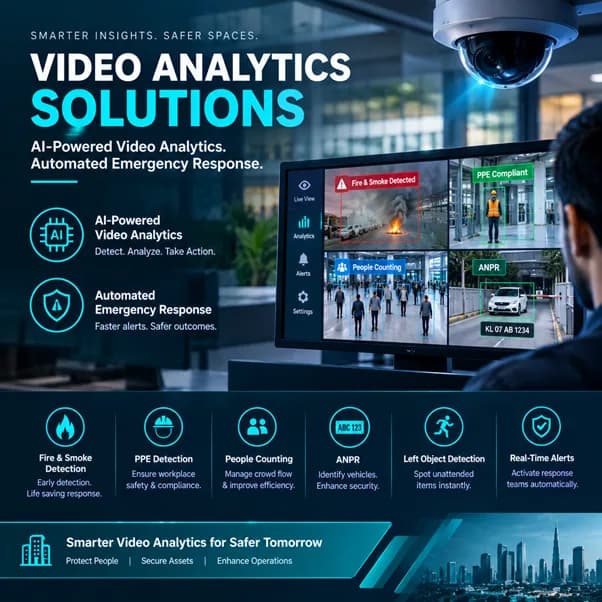
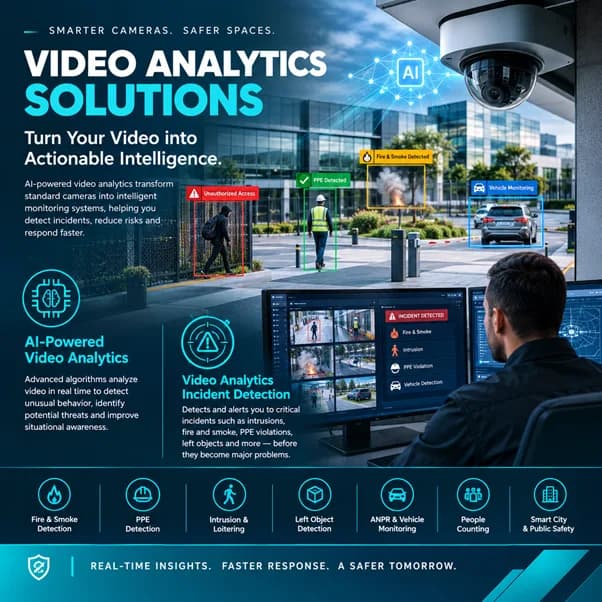
AI-Powered Video Analytics is what makes this practical at scale. Rather than relying on fixed rules such as a colour range or a pixel-change threshold, it learns the contextual signature of real combustion and keeps improving as it is exposed to site-specific footage. The result is detection that adapts to a bright Dubai marina promenade at noon as comfortably as to a dim cable tunnel at midnight.
During an incident, knowing who is inside a building matter as much as knowing where the fire is. Real-Time Identity Verification links camera feeds with access control so that security teams can confirm in seconds who entered a zone, who is still on site and who has reached the muster point. For this to be trustworthy, the system must resist fraud. Anti-Spoofing, also called liveness detection or presentation attack detection, distinguishes a real person from a printed photograph, a phone screen replay or a mask, and is typically evaluated against the ISO/IEC 30107 family of standards.
Safety Tips
- • Meet in a public place
- • Don't pay in advance
- • Check the item before buying
- • Beware of deals that seem too good
Approximate location