How Water Treatment Systems Turn Raw Water Into a Reliable Supply
Long Beach, California, US
Posted 0 views
Water from rivers, lakes, reservoirs, and underground sources is not always suitable for direct consumption. It may contain suspended soil, organic matter, microorganisms, dissolved minerals, and other contaminants. Water treatment systems use a series of physical and chemical processes to improve water quality and make it suitable for public supply. The exact treatment method depends on the source water and the substances that need to be removed.
1. Collecting and Screening Raw Water
The treatment process begins when water is collected from a source such as a river, reservoir, lake, or groundwater well. Pumps and intake structures move it toward the treatment facility.
At the entrance, screens remove larger materials such as leaves, branches, plastic waste, and other debris. This protects pumps and equipment from blockages and damage. Some facilities also use preliminary treatment methods to manage sand, grit, or other materials before the main purification stages.
2. Coagulation and Flocculation
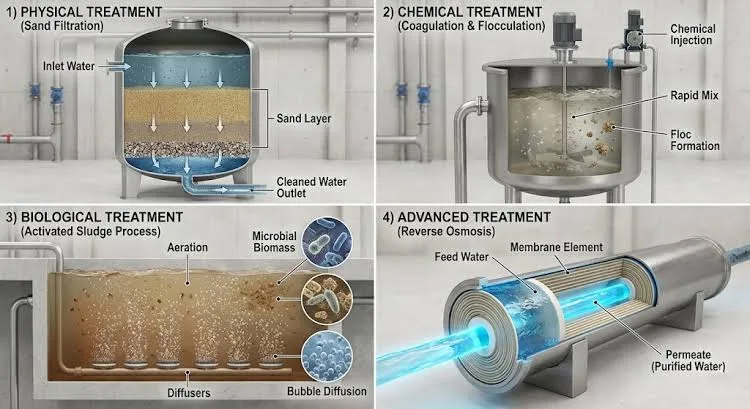
Raw water often contains tiny suspended particles that do not settle easily on their own. During coagulation, treatment operators add chemicals, commonly aluminium or iron salts, to help destabilize these particles.
The water is then gently mixed during flocculation. Small particles combine into larger clusters called flocs, which are easier to separate from the water.
These stages are important because they prepare suspended material for removal in the next treatment process.
3. Sedimentation and Filtration
After flocs form, water enters sedimentation tanks or basins. The flow slows down, allowing heavier particles to settle at the bottom under gravity. The accumulated sludge is removed for appropriate treatment or disposal.
The clearer water then passes through filters. Conventional filtration systems may use layers of sand, gravel, and other filter materials to capture remaining particles.
Some treatment facilities use advanced filtration technologies, including membrane systems, ultrafiltration, or reverse osmosis. These methods are selected according to the quality of the source water and the contaminants that need to be controlled.
4. Disinfection and Water Quality Adjustment
Filtration does not necessarily remove every harmful microorganism. Disinfection provides another barrier against bacteria, viruses, and other disease-causing organisms.
Treatment plants may use chlorine, chloramine, ozone, or ultraviolet light. Some systems maintain a disinfectant residual in the distribution network to help protect water as it travels through pipes.
Operators may also adjust pH and manage mineral levels to reduce pipe corrosion and maintain water quality. The treatment combination depends on local water conditions and applicable drinking-water standards.
5. Storage, Distribution, and Continuous Monitoring
Once treated, water is stored in tanks or reservoirs before being distributed through pipelines to homes, schools, hospitals, and businesses.
Pumps help maintain the required pressure, while elevated storage tanks can provide additional supply during periods of high demand. Water utilities also monitor quality through sampling, laboratory testing, and operational measurements.
Regular checks help operators identify changes in water conditions and respond to treatment or distribution problems. Reliable supply therefore depends on the entire system, not just the purification equipment.
Conclusion
Water treatment systems transform raw water into a reliable public supply through a sequence of carefully managed processes. Screening, coagulation, sedimentation, filtration, disinfection, and monitoring each serve a different purpose. Together, these stages help protect public health and ensure that communities receive water that meets required quality standards.

Safety Tips
- • Meet in a public place
- • Don't pay in advance
- • Check the item before buying
- • Beware of deals that seem too good
Approximate location