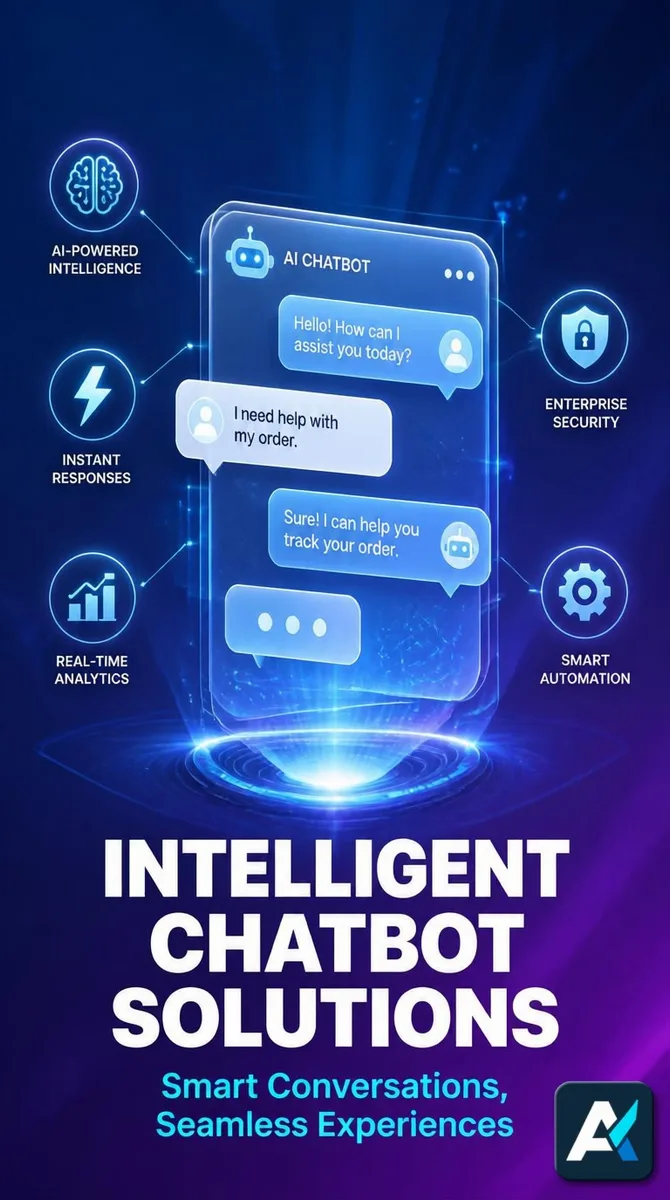
Beyond Chatbots: What a True Virtual Assistant Actually Does
The term "virtual assistant" gets used loosely. Many companies call any chat widget a virtual assistant. But there is a vast difference between a FAQ bot and a true digital agent that takes action on your behalf.
A FAQ bot retrieves information. You ask, "What is your return policy?" It answers with a paragraph from your website. That is useful, but limited.
A true virtual assistant does more. You say, "I need to return the blue sweater I bought last week." The assistant verifies your order, checks the return window, emails a shipping label, processes the refund, and books a courier pickup. You did nothing except state the goal.
That is the difference between information retrieval and task completion. And that is what modern virtual assistant development delivers.
What Makes a Virtual Assistant "Virtual" (Not Just a Chatbot)
The distinction matters for planning, budgeting, and setting expectations:
Capability Chatbot Virtual Assistant
Primary function Answers questions Completes tasks
Integration depth Minimal (FAQs, knowledge base) Deep (CRM, ERP, payment, calendar, shipping)
Action execution None or very limited Creates, updates, processes, books
Context retention Short (one or two exchanges) Long (entire conversation + history)
Proactive suggestions No Yes ("I noticed your subscription renews next week…")
User goal "Tell me X" "Do Y for me"
A virtual assistant is not a single technology. It is a combination of natural language understanding, business logic integration, and secure system access. When a user makes a request, the assistant must understand the intent, map it to a business action, authenticate the user, execute the action across multiple systems, and confirm completion—all within seconds.
Where Virtual Assistants Deliver the Most Value
The highest‑ROI use cases involve multi‑step tasks that currently require human intervention:
Customer Service
Process returns and exchanges
Issue refunds and credits
Update account details and preferences
Reschedule deliveries and appointments
Reset passwords and unlock accounts
IT Support
Provision software access
Escalate complex issues with full context
Troubleshoot common problems
Track incident status
HR and Employee Support
Book time off and check balances
Update personal information
Enroll in benefits during open enrollment
Submit and track expense reports
Answer policy questions from internal documents
Sales and Operations
Schedule meetings and demos
Generate quotes and proposals
Update opportunity stages in CRM
Send follow‑up emails and meeting confirmations
Route leads to appropriate sales representatives
Finance
Approve routine expenses
Generate invoices
Flag unusual transactions for review
Reconcile simple entries
Real impact: A professional services firm deployed a virtual assistant for internal IT support. Password reset requests dropped by 85%, and average resolution time for common issues fell from 45 minutes to 3 minutes.
The Technology That Makes It Possible
True virtual assistants rely on several advanced capabilities working together:
Large language models (LLMs) – Understand natural language and user intent across variations
Tool use (function calling) – Invoke APIs to take actions (update CRM, send email, book calendar)
Retrieval‑augmented generation (RAG) – Pull relevant information from internal documents and databases
State management – Maintain context across multi‑step workflows
Decision logic – Determine when to act, when to ask for clarification, and when to escalate to a human
Authentication and permissions – Securely access systems on behalf of the user
For example, when a user requests a refund, the assistant must authenticate the user, retrieve the order from the e‑commerce system, check the return policy, verify the item is returnable, create a return authorization, initiate the refund in the payment system, and send confirmation—all while maintaining a natural conversation with the user. This requires orchestration across multiple services, each with its own API and authentication.
The Cost of Doing Nothing (or Sticking with a Chatbot)
If your current "assistant" can only answer FAQs, your team is still handling every action. Customers still wait for human processing. The assistant saves a few seconds of reading but none of the operational work.
Consider a customer service team handling 1,000 routine requests per week. If each request takes 10 minutes of agent time, that is 167 hours per week. A virtual assistant handling 60% of those requests saves 100 hours weekly—equivalent to 2.5 full‑time agents.
For a detailed look at how enterprises are deploying virtual assistants for IT, HR, and customer operations, explore the technical resources and case studies available at <a href="https://ahex.co/ai-chatbot-development/">intelligent agent creation</a>. The focus is on production deployments—not proofs of concept.